Future scenario

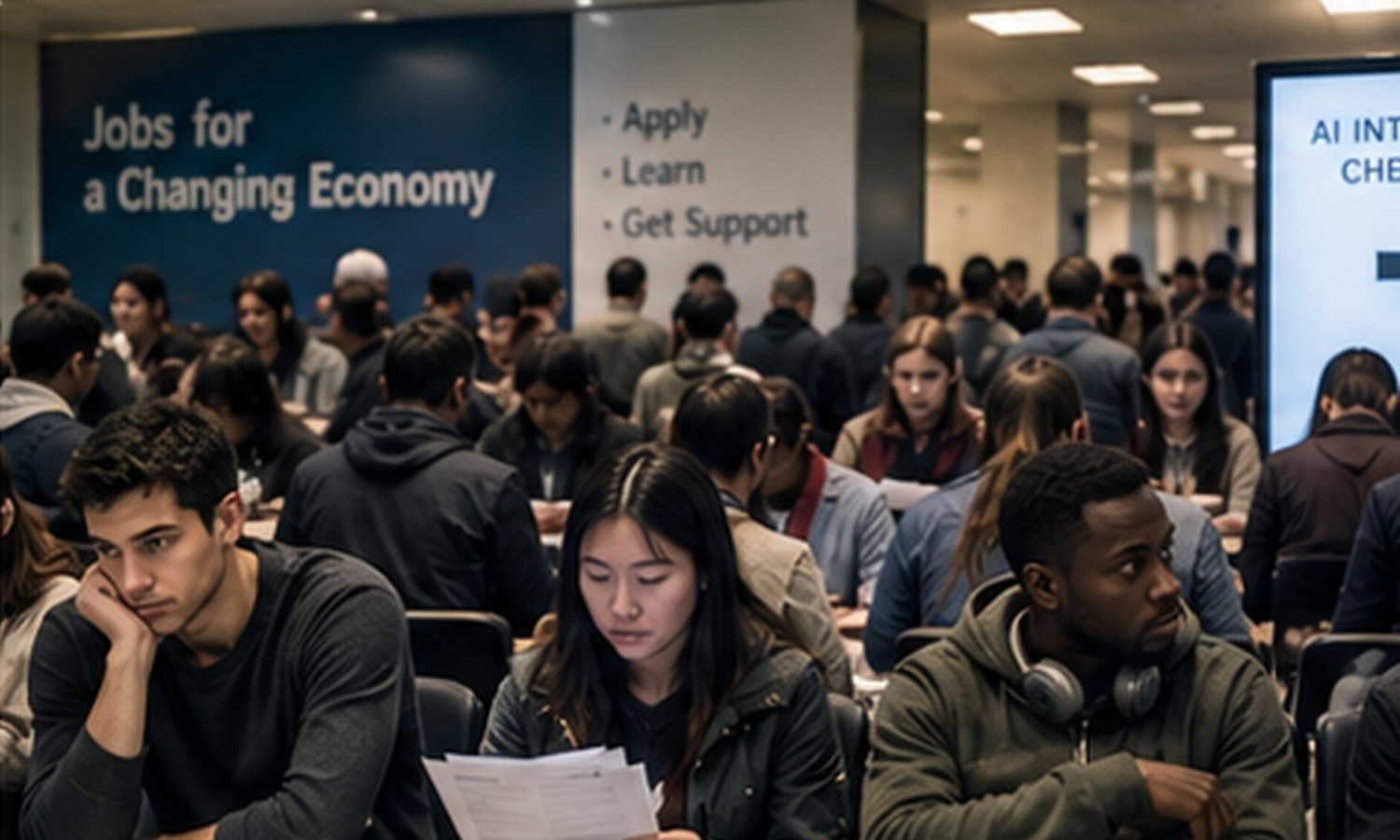
Turbulent Transition

AI adoption and substitution move faster than workers, organizations, and institutions can adapt.

What this future looks like

The defining feature of this future is not mass unemployment. It is speed mismatch. Firms discover valuable uses for AI faster than job categories, training systems, management practices, labor markets, and public institutions can adjust.

Some jobs disappear. Many more are reorganized. Entry-level pathways are especially vulnerable because the tasks that once trained new workers are often the easiest to hand to machines. Companies cut in one place, hire in another, and discover that removing work is easier than redesigning what remains.

The result is churn: productivity gains alongside confusion, labor shortages alongside displacement, and organizations repeatedly rebuilding roles before the last redesign has settled.

Distribution of leverage

Who benefits — and who faces the most pressure?

This is about who is better positioned in this world — and who has a harder time adapting to it.

Most likely to benefit

  • Fast-moving firms able to redesign work before competitors.
  • Experienced workers whose judgment becomes more valuable as routine work is automated.
  • Owners of scarce AI infrastructure and complementary assets.

Most likely to feel the pressure

  • Young workers and people trying to enter exposed occupations.
  • Organizations that automate tasks without rebuilding roles, incentives, and accountability.
  • Institutions whose training, benefits, and labor rules assume slower occupational change.
Conditions

What would have to happen next?

These are the changes that would make this future feel much less hypothetical.

  1. Delegation deepens faster than organizations redesign work.
  2. Labor substitution spreads beyond isolated roles and junior cohorts.
  3. Reemployment, retraining, and wage recovery lag the pace of displacement.
  4. Productivity gains arrive before institutions have mechanisms to distribute or absorb them.
Combinations

What happens when this future overlaps another?

These futures can overlap. Pairing two shows the more specific world you get when both are true at the same time.

What would change our mind?

We would pull this future back if the evidence starts moving the important turning points in the opposite direction.

See how this path has changed →