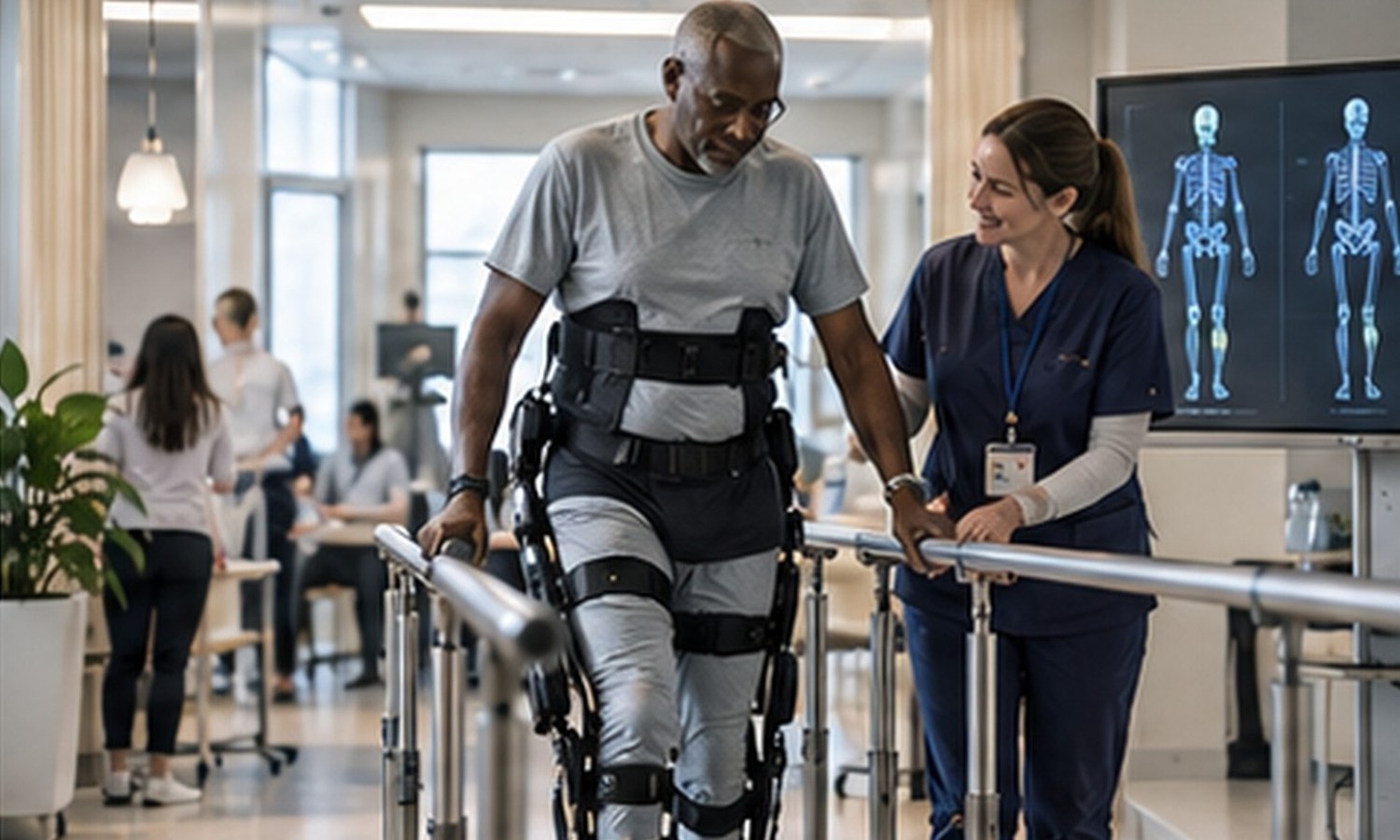
Future scenario

Broad Abundance

AI produces large material gains that spread widely enough to raise living standards, lower important costs, or reduce necessary work.

What this future looks like

AI stops being merely an impressive technology and becomes a general source of cheaper, better production. The important shift is not productivity inside a handful of firms. It is diffusion: lower costs, faster innovation, better services, more output, and enough competition or redistribution that ordinary people experience the gains.

Abundance does not require every job to disappear. It can arrive through augmentation, automation, or both. The test is whether gains escape the balance sheets of frontier firms and show up in housing, health, education, energy, software, science, wages, public services, or time.

The difficult part is distribution. Technical capability is necessary but not sufficient. Organizations have to translate it into real output, physical bottlenecks have to yield, and institutions have to keep the benefits from remaining narrowly concentrated.

Distribution of leverage

Who benefits — and who faces the most pressure?

This is about who is better positioned in this world — and who has a harder time adapting to it.

Most likely to benefit

  • Consumers if important goods and services become meaningfully cheaper or better.
  • Workers if productivity gains translate into wages, shorter hours, or stronger public services.
  • Entrepreneurs and smaller firms if capable AI becomes cheap and widely accessible.

Most likely to feel the pressure

  • Incumbents whose margins depend on scarcity in information-heavy goods and services.
  • Occupations whose income comes from tasks that become abundant and cheap.
  • Owners of bottleneck assets if policy, competition, or new supply erodes scarcity rents.
Conditions

What would have to happen next?

These are the changes that would make this future feel much less hypothetical.

  1. Large AI productivity gains survive the move from demos to real organizations.
  2. Those gains spread across sectors rather than staying inside frontier firms.
  3. Competition, policy, ownership, or redistribution passes a meaningful share of gains to ordinary people.
  4. Physical-world bottlenecks in energy, housing, health, and infrastructure do not absorb most of the benefit.
Combinations

What happens when this future overlaps another?

These futures can overlap. Pairing two shows the more specific world you get when both are true at the same time.

What would change our mind?

We would pull this future back if the evidence starts moving the important turning points in the opposite direction.

See how this path has changed →